Best IVF and Fertility Clinics in Canada
Find the best IVF and fertility clinic in Canada for you. Compare patient reviews, treatment options and IVF costs in Canada.
Top IVF Clinics in Canada— Page 5
Compare IVF treatment costs and patient ratings across fertility clinics in Canada.

Charm Fertility Oakville
Charm Fertility Oakville in Canada offers professional fertility care and assisted reproduction services. Core treatments:…

Anova Fertility & Reproductive Health
Anova Fertility & Reproductive Health is a highly regarded fertility clinic in Southwestern Ontario, Canada,…

OriginElle Fertility Clinic & Women's Health Centre
OriginElle Fertility Clinic & Women's Health Centre in Montréal, Canada, is a world-class fertility clinic…
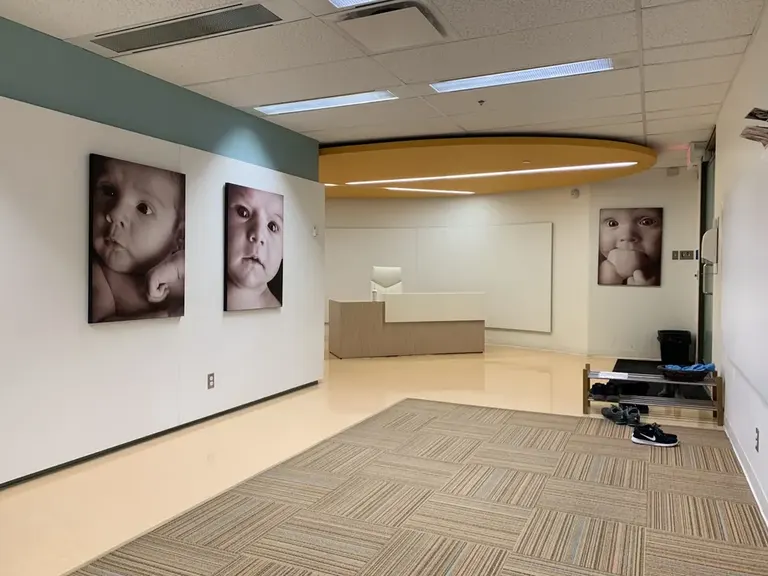
Montreal Fertility Centre
Located in Montréal, Canada, Montreal Fertility Centre offers specialized reproductive services. Core treatments: Patients can…
IVF success rates in Canada
Explore national outcomes for donor eggs, frozen embryo transfers and fresh IVF or ICSI. Find your age group and treatment, and compare with the EU reference where equivalent data are available.
| Transfer type | Rate | Transfers |
|---|---|---|
| Fresh transfer | 53.1% | 2,505 |
| Frozen, no PGT-A | 40.1% | 14,585 |
| Frozen, with PGT-A | 37.7% | 2,128 |
All recipient ages · fresh and frozen donor eggs
A pooled multi-year donor cohort. A recipient-age breakdown is not provided in this figure.
| Age at egg collection | Rate | Transfers |
|---|---|---|
| Under 35 | 44.9% | 5,825 |
| 35–37 years | 39.6% | 3,088 |
| 38–40 years | 29.3% | 2,157 |
| 41–42 years | 24.9% | 795 |
| 43+ years | 19.4% | 423 |
Own eggs · frozen transfer · without PGT-A
| Age at egg collection | Rate | Transfers |
|---|---|---|
| Under 35 | 36.3% | 1,063 |
| 35–37 years | 32.8% | 905 |
| 38–40 years | 24.2% | 892 |
| 41–42 years | 13.8% | 464 |
| 43+ years | 6.6% | 213 |
Own eggs · fresh IVF and ICSI combined
These national results use their registry’s age bands, years, treatment groups and outcome definitions. The EU reference uses different definitions, so a direct difference is not calculated.
View EU reference (2020)
| Source age band | Donor eggsPer transfer | FrozenPer thaw | ICSIPer collection |
|---|---|---|---|
| <34 years | 45.7% | 38.8% | 25.6% |
| 35–39 years | 45.5% | 32.8% | 20.2% |
| 40+ years | 41.7% | 27.9% | 10.1% |
Equal weight per reporting EU-27 country. Donor eggs: 16 countries; frozen transfers: 18; fresh ICSI: 19. The medians are country reference values, rather than pooled patient success rates. ESHRE source
Source: CFAS / CARTR Plus · BORN Ontario
About these statistics
The 2025 CARTR Plus annual report covers 36 reporting Canadian clinics for 2024 treatment and pregnancy data. Its ongoing pregnancy endpoint requires at least one fetal heartbeat on ultrasound. Own-egg ages refer to the oocyte provider. The fresh series combines IVF and ICSI. Frozen own-egg results here exclude PGT-A. Donor results pool 2013–2023 across all recipient ages and exclude gestational carriers. The source numerator and denominator are used to calculate each displayed rate. These series do not match the EU 2020 clinical-pregnancy definitions and age bands.
Questions to ask your clinic
- What are your clinical pregnancy and birth outcomes for patients of my age using the same egg source?
- Is the rate per started cycle, per egg collection, per thawing cycle or per transfer?
- Which treatment years and how many cases are included, and how do you account for missing follow-up?
- How do you follow up outcomes for patients who return to another country?
Popular Destinations in Canada
Explore popular cities and regions in Canada.


Frequently Asked Questions
Common questions about IVF in Canada.
Sperm donation is legal in Canada, but it is highly regulated by federal legislation, specifically the Assisted Human Reproduction Act (AHRA) and its associated regulations.
The use of donor sperm is permitted for assisted reproduction, whether through registered clinics, sperm banks, or private arrangements, but it is subject to strict safety and traceability requirements set by Health Canada. Donors must be over 18 and undergo rigorous screening for infectious diseases like HIV, hepatitis, syphilis, chlamydia, and gonorrhea, as well as CMV, and a detailed assessment of their medical and genetic history.
It is important to note that while the law is currently silent on the issue, donor anonymity is still tacitly protected, and individuals conceived through donated sperm do not automatically have the right to know their donor’s identity. Furthermore, it is illegal to purchase sperm or pay a donor, although reimbursement for reasonable, receipted expenses is permitted.