Best IVF and Fertility Clinics in Latvia
Find the best IVF and fertility clinic in Latvia for you. Compare patient reviews, treatment options and IVF costs in Latvia.
Top IVF Clinics in Latvia
Compare IVF treatment costs and patient ratings across fertility clinics in Latvia.

Klīnika EGV, SIA
Located in Riga, Latvia, Klīnika EGV, SIA offers individualized treatment plans. Clinical focus and indications:…
iVF Riga
iVF Riga in Riga, Latvia, is a highly respected fertility clinic specializing in comprehensive infertility…
iVFRiga Cilmes šūnu banka
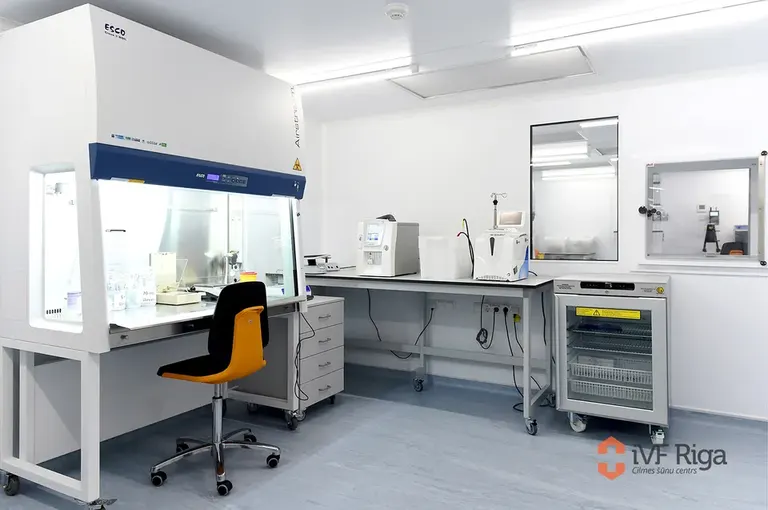
Located in Riga, Latvia, iVFRiga Cilmes šūnu banka is the first national stem cell bank…

EMBRIONS, Reproduktīvās Medicīnas Centrs
EMBRIONS, Reproduktīvās Medicīnas Centrs in Riga, Latvia is a fertility clinic providing care with modern…

AVA Clinic
AVA Clinic in Riga, Latvia, is a highly regarded fertility clinic specializing in comprehensive assisted…

My Clinic Riga - Neauglības ārstēšana, Лечение бесплодия
My Clinic Riga - Neauglības Ārstēšana, Лечение бесплодия is a highly regarded fertility clinic in…
IVF cost in Latvia: treatment prices
IVF with own eggs from €1,830. Donor egg IVF from €4,860.
Based on published prices from 5 clinics.
Compare IVF prices in Latvia- IVF with own eggs
- €2,155Median starting price · 2 clinics
- IVF with donor eggs
- €5,805Median starting price · 2 clinics
- Egg freezing
- €2,300Median starting price · 1 clinic
- IUI / insemination
- €350Lowest starting price · 4 clinics
Medication, tests and additional procedures may cost extra. Check each clinic’s package inclusions.
IVF age limits and treatment requirements in Latvia
Section 13 allows a heterosexual couple or a woman to request treatment in writing. Single-woman access does not by itself establish couple access or joint parentage for two women.
Check IVF laws in Latvia- Age limits
- Private treatment: clinic assessment
- Patient eligibility
- Individual women and heterosexual couples
- Donor identity
- Donor identity withheld from recipients
- Foreign patients
- Subject to eligibility and clinic acceptance
IVF success rates in Latvia
Explore national outcomes for donor eggs, frozen embryo transfers and fresh IVF or ICSI. Find your age group and treatment, and compare with the EU reference where equivalent data are available.
| Recipient age | Country | EU median |
|---|---|---|
| <34 years | 37.5% | 45.7% |
| 35–39 years | 61.5% | 45.5% |
| 40+ years | 42.4% | 41.7% |
Age of the recipient · donor treatment combined
EU median: 16 reporting EU countries
| Age group | Country | EU median |
|---|---|---|
| <34 years | 53.2% | 38.8% |
| 35–39 years | 50.3% | 32.8% |
| 40+ years | 28.4% | 27.9% |
Own eggs · frozen IVF / ICSI embryos
EU median: 18 reporting EU countries
| Age group | Country | EU median |
|---|---|---|
| <34 years | 24.5% | 25.6% |
| 35–39 years | 19.0% | 20.2% |
| 40+ years | 14.5% | 10.1% |
Own eggs · fresh ICSI treatment
EU median: 19 reporting EU countries
Each table measures a different treatment stage: transfer, thawing or egg collection. Compare the same treatment and age group across countries.
The EU reference is the median of available EU-27 country rates for the same treatment, age band and year (2020). Each country has equal weight. It describes the middle country result, not the pooled success rate of all EU patients.
Source: ESHRE / European IVF Monitoring
About these statistics
These are clinical pregnancy rates, rather than birth rates or the cumulative chance of a baby from a full course of treatment. The 2020 reporting year was affected by the pandemic. Patient populations, registry coverage and reporting completeness differ between countries.
Age bands follow the source labels: <34, 35–39 and 40+. The source does not clarify the boundary for age 34. Donor results use recipient age and combine donor treatment variants. Age-specific cohort sizes and separate donor transfer variants are not provided in these tables. “Not published” means this report provides no corresponding age-specific rate.
EU-27 membership is used for the benchmark. Missing country rates are omitted, never counted as zero. Non-EU reporting countries are excluded from the reference. Country rates are descriptive; differences do not establish clinic quality or a personal prognosis.
Questions to ask your clinic
- What are your clinical pregnancy and birth outcomes for patients of my age using the same egg source?
- Is the rate per started cycle, per egg collection, per thawing cycle or per transfer?
- Which treatment years and how many cases are included, and how do you account for missing follow-up?
- How do you follow up outcomes for patients who return to another country?
Popular Destinations in Latvia
Explore popular cities and regions in Latvia.

Frequently Asked Questions
Common questions about IVF in Latvia.
Sperm donation is legal in Latvia and is regulated by the Sexual and Reproductive Health Law, enacted in 2002, alongside specific regulations from the Cabinet of Ministers.
The practice is permitted for heterosexual couples and single women, and some clinics may offer treatment to women in same-sex relationships, potentially requiring one partner to be registered as single. Latvian law mandates strict anonymity for sperm donors, preventing potential parents from accessing identifying information, though non-identifying details like genetic data, physical characteristics, and education level are available to recipients.
Men between the ages of 18 and 45 can become sperm donors in Latvia, provided they meet stringent health requirements, including thorough medical and psychiatric evaluations, and infection screenings. Regulations also limit the number of children that can be born in Latvia from a single donor to a maximum of three, excluding cases of multiple births.