Best IVF and Fertility Clinics in Germany
Find the best IVF and fertility clinic in Germany for you. Compare patient reviews, treatment options and IVF costs in Germany.
Top IVF Clinics in Germany— Page 5
Compare IVF treatment costs and patient ratings across fertility clinics in Germany.

Kinderwunschzentrum Hamburg Barkhof
Kinderwunschzentrum Hamburg Barkhof is a well-regarded fertility clinic in Hamburg, Germany, known for its personalized…
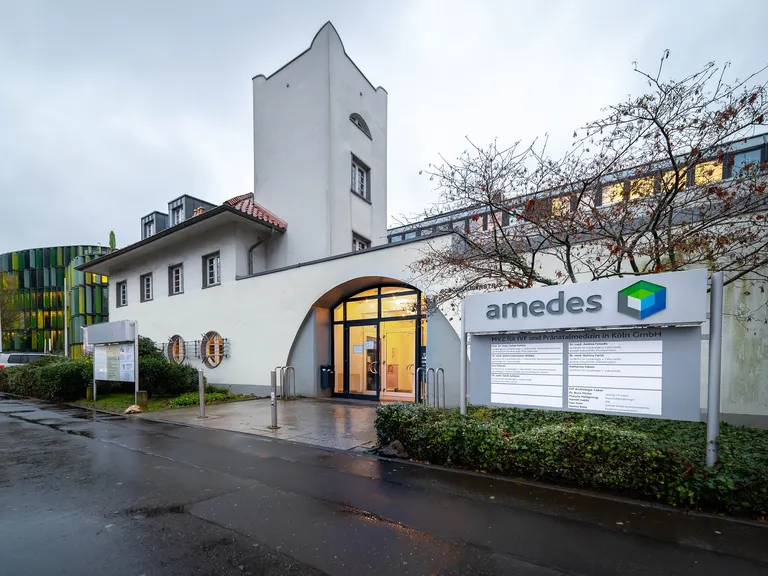
Zentrum für Kinderwunschbehandlung
Located in Cologne, Germany, Zentrum für Kinderwunschbehandlung offers individualized patient care with dedicated medical professionals.…

Kinderwunschzentrum Hildesheim
Kinderwunschzentrum Hildesheim is a highly reputable fertility clinic in Hildesheim, Germany, renowned for its comprehensive…

Kinderwunschzentrum Leipzig-Chemnitz
Kinderwunschzentrum Leipzig-Chemnitz in Chemnitz, Germany, is a distinguished fertility clinic renowned for its comprehensive diagnosis…

Kinderwunsch-Zentrum Ludwigsburg / Dr. Ott
Kinderwunsch-Zentrum Ludwigsburg / Dr. Ott is a highly respected fertility clinic in Ludwigsburg, Germany, renowned…
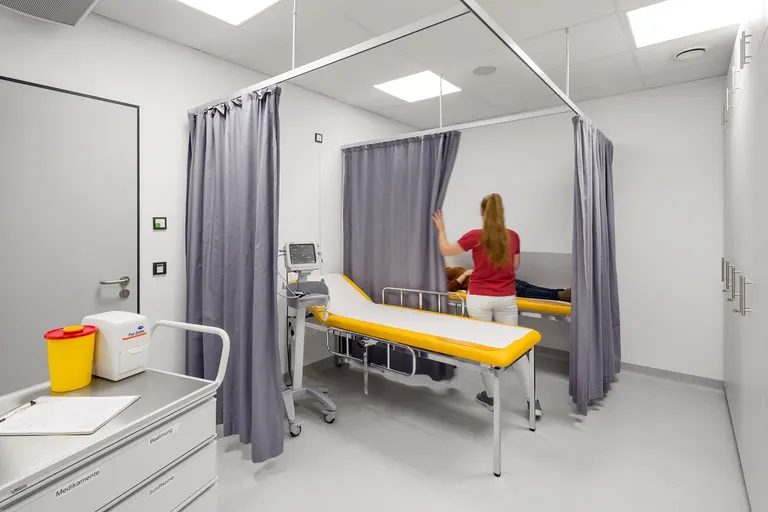
Fertility Center Amberg; Dr. med. Jürgen Krieg;
Fertility Center Amberg; Dr. med. Jürgen Krieg; in Amberg, Germany, is a distinguished fertility clinic…

Kinderwunschzentrum Darmstadt MVZ
Kinderwunschzentrum Darmstadt MVZ in Darmstadt, Germany provides comprehensive fertility care.
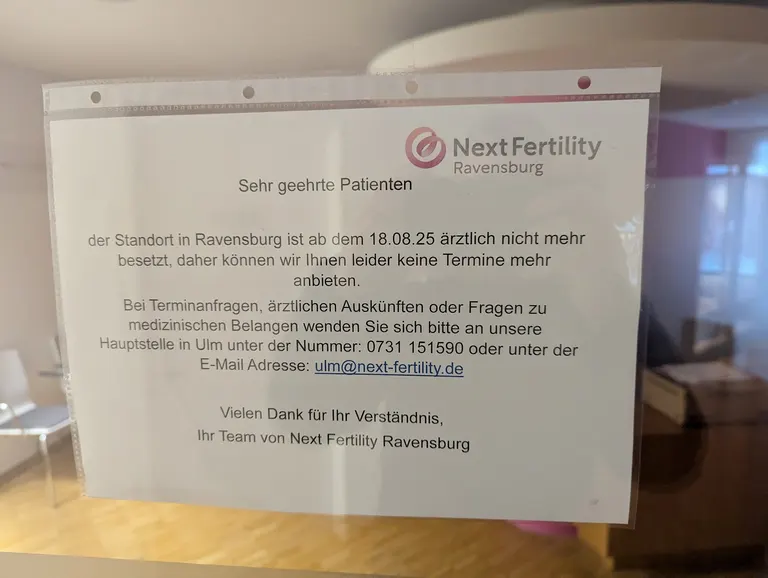
Next Fertility Ravensburg

Next Fertility Ulm
Located in Ulm, Germany, Next Fertility Ulm provides specialized fertility care for both statutory and…

REProVita - Kinderwunschzentrum Recklinghausen
REProVita - Kinderwunschzentrum Recklinghausen is a highly regarded fertility clinic in Muenster, Germany, renowned for…

Kinderwunschzentrum Gelsenkirchen
Founded in 1999, Kinderwunschzentrum Gelsenkirchen is a fertility clinic based in Gelsenkirchen, Germany. Core treatments:…

Kinderwunschzentrum Erfurt
Kinderwunschzentrum Erfurt is a highly regarded fertility clinic in Erfurt, Germany, specializing in comprehensive assisted…
IVF success rates in Germany
Explore national outcomes for donor eggs, frozen embryo transfers and fresh IVF or ICSI. Find your age group and treatment, and compare with the EU reference where equivalent data are available.
| Recipient age | Country | EU median |
|---|---|---|
| <34 years | Not published | 45.7% |
| 35–39 years | Not published | 45.5% |
| 40+ years | Not published | 41.7% |
Age of the recipient · donor treatment combined
EU median: 16 reporting EU countries
| Age group | Country | EU median |
|---|---|---|
| <34 years | 31.8% | 38.8% |
| 35–39 years | 28.2% | 32.8% |
| 40+ years | 18.8% | 27.9% |
Own eggs · frozen IVF / ICSI embryos
EU median: 18 reporting EU countries
| Age group | Country | EU median |
|---|---|---|
| <34 years | 31.1% | 25.6% |
| 35–39 years | 23.8% | 20.2% |
| 40+ years | 11.4% | 10.1% |
Own eggs · fresh ICSI treatment
EU median: 19 reporting EU countries
Each table measures a different treatment stage: transfer, thawing or egg collection. Compare the same treatment and age group across countries.
The EU reference is the median of available EU-27 country rates for the same treatment, age band and year (2020). Each country has equal weight. It describes the middle country result, not the pooled success rate of all EU patients.
Source: ESHRE / European IVF Monitoring
About these statistics
These are clinical pregnancy rates, rather than birth rates or the cumulative chance of a baby from a full course of treatment. The 2020 reporting year was affected by the pandemic. Patient populations, registry coverage and reporting completeness differ between countries.
Age bands follow the source labels: <34, 35–39 and 40+. The source does not clarify the boundary for age 34. Donor results use recipient age and combine donor treatment variants. Age-specific cohort sizes and separate donor transfer variants are not provided in these tables. “Not published” means this report provides no corresponding age-specific rate.
EU-27 membership is used for the benchmark. Missing country rates are omitted, never counted as zero. Non-EU reporting countries are excluded from the reference. Country rates are descriptive; differences do not establish clinic quality or a personal prognosis.
Questions to ask your clinic
- What are your clinical pregnancy and birth outcomes for patients of my age using the same egg source?
- Is the rate per started cycle, per egg collection, per thawing cycle or per transfer?
- Which treatment years and how many cases are included, and how do you account for missing follow-up?
- How do you follow up outcomes for patients who return to another country?
Popular Destinations in Germany
Explore popular cities and regions in Germany.


Frequently Asked Questions
Common questions about IVF in Germany.
Gender selection for non-medical reasons is not permitted in Germany.
While techniques like preimplantation genetic diagnosis (PGD) can determine an embryo’s sex, German law specifically prohibits using PGD for this purpose. Similarly, sperm sorting methods like MicroSort are also forbidden unless they are used to prevent sex-linked genetic diseases.
PGD is allowed in Germany, but only to prevent serious genetic defects and hereditary diseases; in these specific cases, sex selection may be permissible if it avoids passing on a sex-linked condition like hemophilia or Duchenne muscular dystrophy.